
In the midst of complex international procedures, certified translation for embassies is no longer just a basic service. It’s the key that can either open the door of acceptance—or shut it completely.
Why Are Your Documents Rejected Even When They’re Correct?
Have you ever prepared your documents meticulously, double-checked everything, translated each paper accurately—only to be rejected by the embassy?
Chances are, the issue wasn’t in the content itself, but in how it was linguistically presented—or more specifically, whether it was a certified translation approved by the embassy.
In the world of embassies, a good translation is not enough. It must be smart, precise, legal, and aligned with the destination country’s standards.
A certified translation is the crucial bridge between you and the embassy—often the deciding factor between acceptance or rejection.
What Is a Certified Translation, and Why Do Embassies Care?
A certified translation is not just a linguistic conversion. It carries official and legal credibility.
It’s carried out by an authorized translation office, which signs and stamps the document to confirm the translation is accurate, faithful to the original, and legally valid.
✅ Key Features of Certified Translation:
- Signature from an authorized office
- Official stamp
- Legal statement of accuracy
- Translator’s or agency’s credentials (sometimes required)

Why Do Embassies Care More Than You Think?
In recent years, embassies have become stricter in document reviews. It’s no longer enough for your document to be factually correct. They now assess:
- Formatting
- Date consistency
- Legal phrasing
- Cultural accuracy of terminology
- The tone of official language (some embassies reject documents based on formatting alone—even if the content is correct!)
⚠️ Real Example:
A birth certificate translated from Arabic to English may be rejected if it uses “Birth location” instead of the standard “Place of birth.”
Certified vs. Standard vs. Machine Translation
| Feature | Certified Translation | Standard Translation | Machine Translation (e.g. Google Translate) |
|---|---|---|---|
| Language Accuracy | High – human-reviewed | Moderate | Inconsistent – context-dependent |
| Legal Wording | Yes | Often not | Impossible |
| Official Stamp & Signature | Yes | No | No |
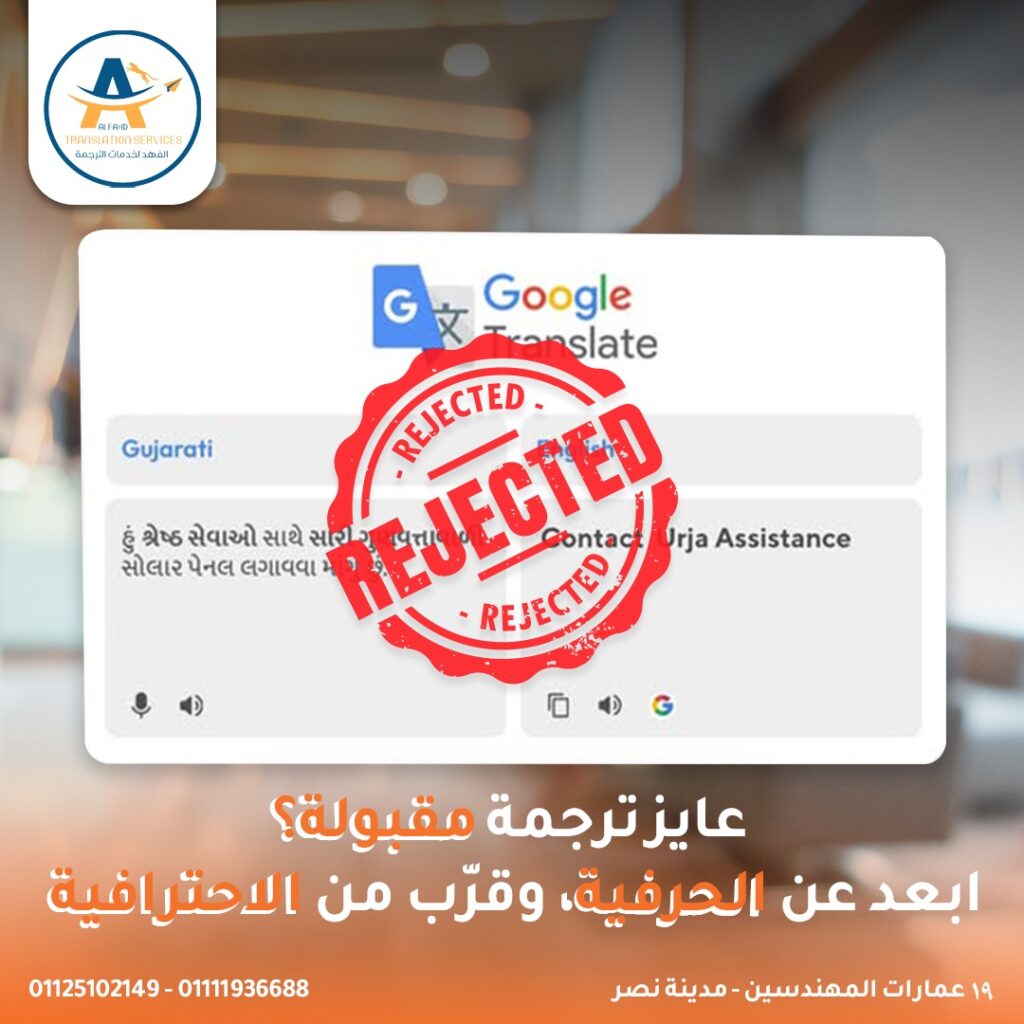
| Embassy Acceptance | Guaranteed if criteria are met | Not guaranteed | Mostly rejected |
| Cultural Sensitivity | Always considered | Sometimes | Rarely |
Translation Requirements Vary by Document Type
Not all documents are treated equally. Each type requires a tailored approach based on embassy expectations.
At Al-Fahd Certified Translation, we understand these differences and handle each case with expertise.
1. Immigration Files
- Extremely accurate translations required (especially degrees and employment history)
- Embassies scrutinize dates, positions, and legal terms
- A mistranslated company name may raise suspicion
2. Education Files
- Must follow specific formats (transcripts, degrees, GPA, subjects)
- Some institutions require certified translations by approved bodies
3. Marriage or Family Reunification Files
- Sensitive translations for marriage/birth certificates
- Clear indication of legal relationships
- Any ambiguity in surnames or titles can lead to rejection
Beyond the Stamp: Cultural and Legal Understanding
A professional translator doesn’t just convert words—they understand legal and cultural contexts. For example:
The Arabic word “شهادة” could mean:
- University degree
- Birth certificate
- Death certificate
An inexperienced translator may just write “Certificate” — but the correct meaning must be clarified based on context.
The “Smart File”: A Modern Approach to Translation
Leading agencies now focus on delivering a Smart File, not just a translated page.
A Smart File includes:
- Professionally formatted documents
- Culturally appropriate and legally accurate wording
- Logical document arrangement for easy embassy review
Common Mistakes That Lead to Rejection
❌ Typical Errors:
- Using incorrect terms like “degree” instead of “certificate”
- Literal name translations that don’t match passport spelling
- Direct translation of legal expressions without context
- Missing official stamp or signature
- Disorganized or incomplete document sets
✅ What Al-Fahd Does to Avoid This:
- Every document is reviewed by a legal/linguistic expert
- Documents are formatted to official embassy standards
- Legal terms are carefully verified
- Both digital and physical delivery are archived and verified
Can Certified Translations Be Used in Multiple Countries?
It depends on the country and the embassy. Some embassies accept translations from any legally certified office. Others require:
- That the translation comes from a locally authorized office
- Or that it’s authenticated by an official entity (like the Ministry of Justice or Foreign Affairs)
At Al-Fahd, we help you determine the exact requirements in advance to avoid delays or rejection.
Al-Fahd: Translation That Guarantees Acceptance
At Al-Fahd Certified Translation Services, our extensive experience ensures:
- First-time acceptance of your documents
- Full compliance with each embassy’s specific requirements (Canada, Germany, UK…)
- Customization according to the file type and destination
- Continuous updates on embassy rules and policies
- Thorough review by legal and language professionals

Golden Tips to Ensure Your Documents Are Accepted the First Time
- Choose a trusted, certified translation office
- Ask about the specific embassy requirements
- Don’t use Google Translate or raw AI tools
- Make sure each page has an official stamp and signature
- Double-check all details (names, dates, terminology)
🌍 What Our International Clients Say
At Al-Fahd Certified Translation, results speak louder than words. Our service has impressed not just embassies—but clients from around the world.
🇬🇧 Alex Jones – UK:
“I’ve tried other agencies before, but none match Al-Fahd’s professionalism. Their team understands exactly what the UK embassy needs. The translation was spot-on and perfectly formatted.”
🇪🇬 Elizabeth Williams – Foreign Resident in Egypt:
“I needed a certified translation for my daughter’s academic file. Everything was ready within two days. Thank you for the speed and precision!”
In Conclusion: Translation Is Not a Luxury… It’s an Investment in Your Future
Whether you’re immigrating, studying, getting married, or starting a business abroad, success starts with a properly translated document.
Certified translation isn’t just a linguistic service—it’s your passport to a new chapter in life.
At Al-Fahd, we’re committed to accuracy, speed, and reliability.
We don’t just translate words—we translate your opportunities.
⚡ How to Get Started in Simple Steps:
- Send a clear photo of your document (via WhatsApp or email)
- Get a quote and delivery time within minutes
- Upon confirmation, translation begins immediately
- Receive a stamped PDF file or request printed delivery
- Need edits or help? Our support is available 24/7
🎯 Want to Ensure Your Documents Are Accepted the First Time?
Contact us today, and let Al-Fahd’s team turn your documents into certified Smart Files.
Whatever your questions or document types, we’re here for you—quickly, accurately, and professionally.
📱 Phone: 01111936688
📧 Email: cairo1st@alfahdtranslationservices.com
📍 Address: 19 Mohandessin Buildings, Nasr City – next to City Stars
📌 Let your documents cross embassy borders with confidence—because trust isn’t bought… it’s earned through every successful experience.

Embassy-Approved Translation Office | Certified Translation Services in Nasr City | Certified Translations in All Language
Want to learn more about certified translation and how to choose the right service for your documents? Click here.